
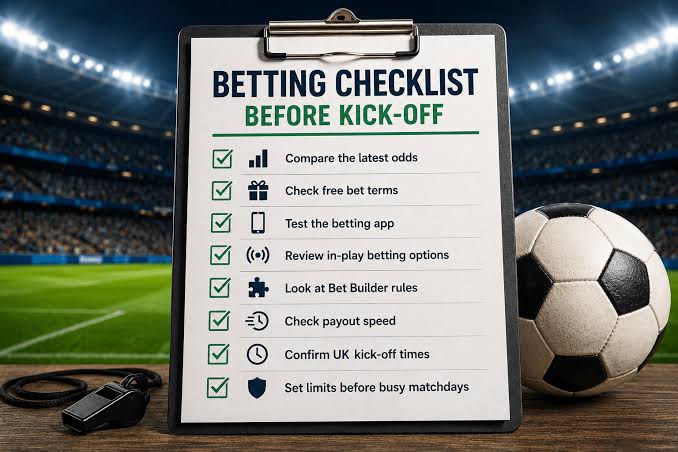
Consistency in betting rarely comes from insight alone—it comes from process. In the Thai League 2022/23 season, bettors who applied the same evaluation structure across every match reduced errors more effectively than those relying on intuition. A checklist transforms scattered analysis into repeatable decision-making.
Why a Checklist Improves Decision Quality
A checklist prevents critical factors from being overlooked. It forces each decision to pass through the same logical filter.
The cause is structured repetition. The outcome is reduced inconsistency. The impact is fewer impulsive or incomplete decisions, especially under time pressure.
What Happens Without a Structured Process
Without a checklist, attention shifts depending on context. Some matches are overanalyzed, while others rely on quick judgment.
The cause is variable focus. The outcome is uneven decision quality. The impact is unpredictable results, even when underlying knowledge is sufficient.
What a Functional Betting Checklist Must Include
A checklist must focus on factors that directly influence match probability. Including too many elements reduces usability.
Before building one, focus on these core components:
- Team performance metrics, including recent xG trends.
- Squad availability and confirmed or expected lineups.
- Tactical matchup between both teams.
- Market odds compared to estimated probability.
These elements ensure that every decision is grounded in relevant information rather than narrative bias.
How to Structure the Checklist for Speed and Clarity
A checklist must be usable under real conditions. Complexity reduces its effectiveness.
Mechanism of Efficiency
Each item should be answerable quickly with a clear outcome—either it supports the selection or raises doubt. This binary structure speeds up evaluation without sacrificing depth.
The cause is simplified structure. The outcome is faster decision-making. The impact is consistent application across all matches.
Turning the Checklist Into a Repeatable Routine
A checklist only works if it becomes a habit. Sporadic use limits its value.
Before placing any bet, apply this sequence:
- Review each checklist item in the same order.
- Confirm that all required information is available.
- Identify any contradictions between factors.
- Proceed only if the majority of indicators align.
This routine ensures that decisions are not influenced by external pressure or time constraints.
Where Checklists Commonly Fail
Some bettors abandon checklists after short-term losses, assuming the system is ineffective. In reality, the issue is often inconsistency in application.
The cause is lack of discipline. The outcome is partial or selective use. The impact is that the checklist loses its intended control over decision-making.
How Structured Interfaces Reinforce Checklist Use
The environment in which decisions are made can support or undermine discipline. Clear presentation of relevant data reduces friction.
In practical use, when bettors interact through a sports betting service such as ยูฟ่า ufa168, the availability of match data alongside odds can align well with checklist-based evaluation. This allows users to verify each checklist item within a single workflow, reducing the chance of skipping steps.
Comparing Checklist-Based vs Intuitive Decisions
The difference between structured and intuitive approaches becomes evident over time.
Before evaluating your method, consider the contrast:
- Checklist-based decisions follow consistent criteria across all matches.
- Intuitive decisions vary depending on confidence or recent results.
- Structured approaches reduce emotional influence.
- Intuitive approaches amplify bias during winning or losing streaks.
- Checklist use improves long-term stability.
- Intuition creates short-term variability.
This comparison highlights that discipline, not insight, drives consistency.
Interpreting this difference shows why experienced bettors rely on systems rather than instincts alone.
How Broader Context Shapes Decision Discipline
In other environments, references to a casino online often emphasize speed and continuous play. This contrasts with checklist-based betting, where pauses and structured evaluation are essential for maintaining quality decisions.
When a Checklist Needs Adjustment
A checklist is not static. Changes in league dynamics, team behavior, or available data may require updates.
The cause is evolving conditions. The outcome is outdated criteria. The impact is reduced effectiveness if adjustments are not made periodically.
Building a Checklist That Lasts
For long-term use, the checklist must remain simple, relevant, and adaptable.
Before finalizing your system, follow this framework:
- Limit items to high-impact factors only.
- Ensure each item has a clear purpose in decision-making.
- Test the checklist across multiple matches for consistency.
- Refine based on observed weaknesses or gaps.
This approach ensures that the checklist remains practical rather than theoretical.
Summary
A personal checklist for Thai League 2022/23 betting creates consistency by standardizing how each match is evaluated. It reduces errors, limits emotional influence, and improves long-term decision quality. Its effectiveness depends on disciplined application and ongoing refinement.